Conservation area at your postcode, checked
Your house has 65 other things to check
Get the full Eavesdrop read — £9.99, up to 66 sources, PDF in 30 seconds.
Get your Eavesdrop reportGet 6 home-buying tips by email — free
Common questions
- What does living in a conservation area mean?
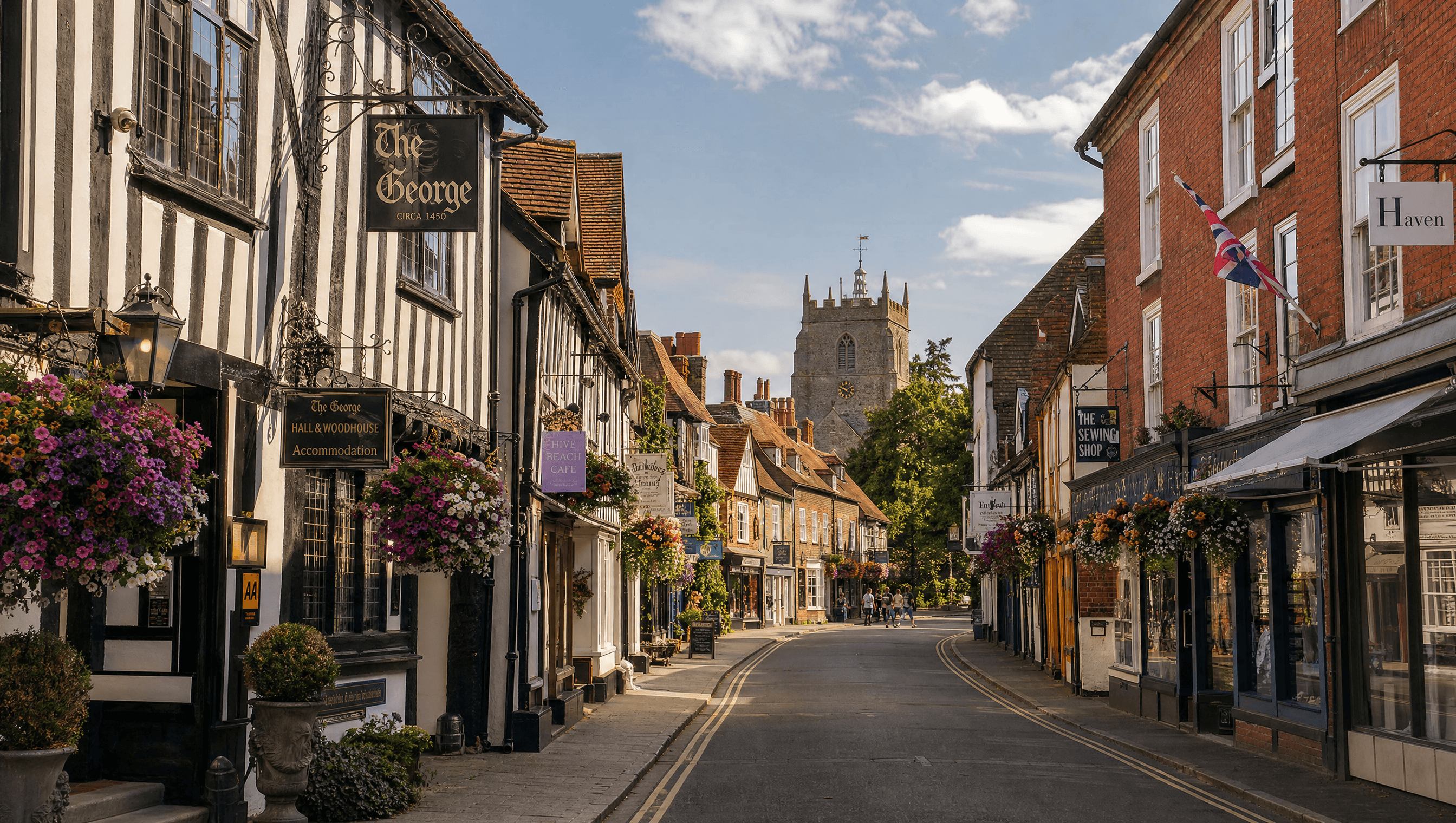
- A conservation area is a designated area of special architectural or historic interest whose character or appearance the Local Planning Authority (LPA) considers it is desirable to preserve or enhance. Designations are made under section 69 of the Planning (Listed Buildings and Conservation Areas) Act 1990. Around 10,000 conservation areas exist across England, covering historic town centres, Georgian terraces, Victorian suburbs, and rural villages. Living inside one means additional planning controls apply to the property: works that would be permitted development elsewhere may require prior approval or full planning permission. The character and setting of the area, not just individual buildings, is what the designation protects.
- What planning rules apply to properties in a conservation area?
- Conservation area designation restricts certain permitted development rights. Homeowners must give 6 weeks' prior notification to the LPA before demolishing a building over 115 m³. Certain extensions (particularly side extensions visible from a highway) that would be permitted elsewhere require full planning permission. Cladding the exterior of a house in stone, artificial stone, pebbledash, render, timber, plastic, or tile requires planning permission. Trees of 75mm diameter or more must be notified to the LPA before being cut or pruned. The LPA can also issue Article 4 Directions to remove further permitted development rights — common in historic town centres. Always check with your LPA before starting any external works.
- What is an Article 4 Direction and does it apply to my area?
- An Article 4 Direction is made by a Local Planning Authority under Article 4 of the Town and Country Planning (General Permitted Development) (England) Order 2015. It removes some or all of the permitted development rights that would normally apply to a property, meaning work you would ordinarily do without planning permission requires a full application instead. Article 4 Directions are commonly used inside conservation areas to protect architectural uniformity — for example, requiring planning permission to replace timber sash windows with uPVC, to repoint brickwork with hard cement, or to remove front garden walls. The presence of an Article 4 Direction is disclosed in the LPA's Local Land Charges Register; a solicitor's local search (LLC1/CON29) will reveal it on exchange.
- Can I change the windows in a conservation area?
- Replacing windows in a conservation area may require planning permission if an Article 4 Direction is in place — check with your LPA before ordering anything. Even without an Article 4 Direction, the LPA can refuse retrospective permission and require reinstatement of original features. Most LPAs prefer sympathetic repairs to original timber windows over wholesale replacement; double-glazed timber sashes are widely accepted where single-glazing cannot be retained. uPVC is usually refused in conservation areas with active Article 4 Directions. Heritage window specialists and conservation officers can advise on acceptable materials. Eavesdrop's full report flags Article 4 Directions discovered via the local authority data sources.
- Does conservation area status affect property value?
- Research by Historic England (2017 'Heritage Counts' data) found that conservation area designation adds a modest premium to residential property values — typically 1–4% in areas where the designation is well-managed and where historic character is well-preserved. The premium reflects both the amenity value of a coherent historic streetscape and the restrictions that prevent unsympathetic development nearby. However, the additional planning controls also increase the cost and complexity of renovation, extension, and window replacement — which can offset the premium for buyers planning significant works. For a property in a conservation area with a high proportion of Article 4 Directions, factor in a 10–20% uplift on external works costs versus a non-designated equivalent before committing to offer.