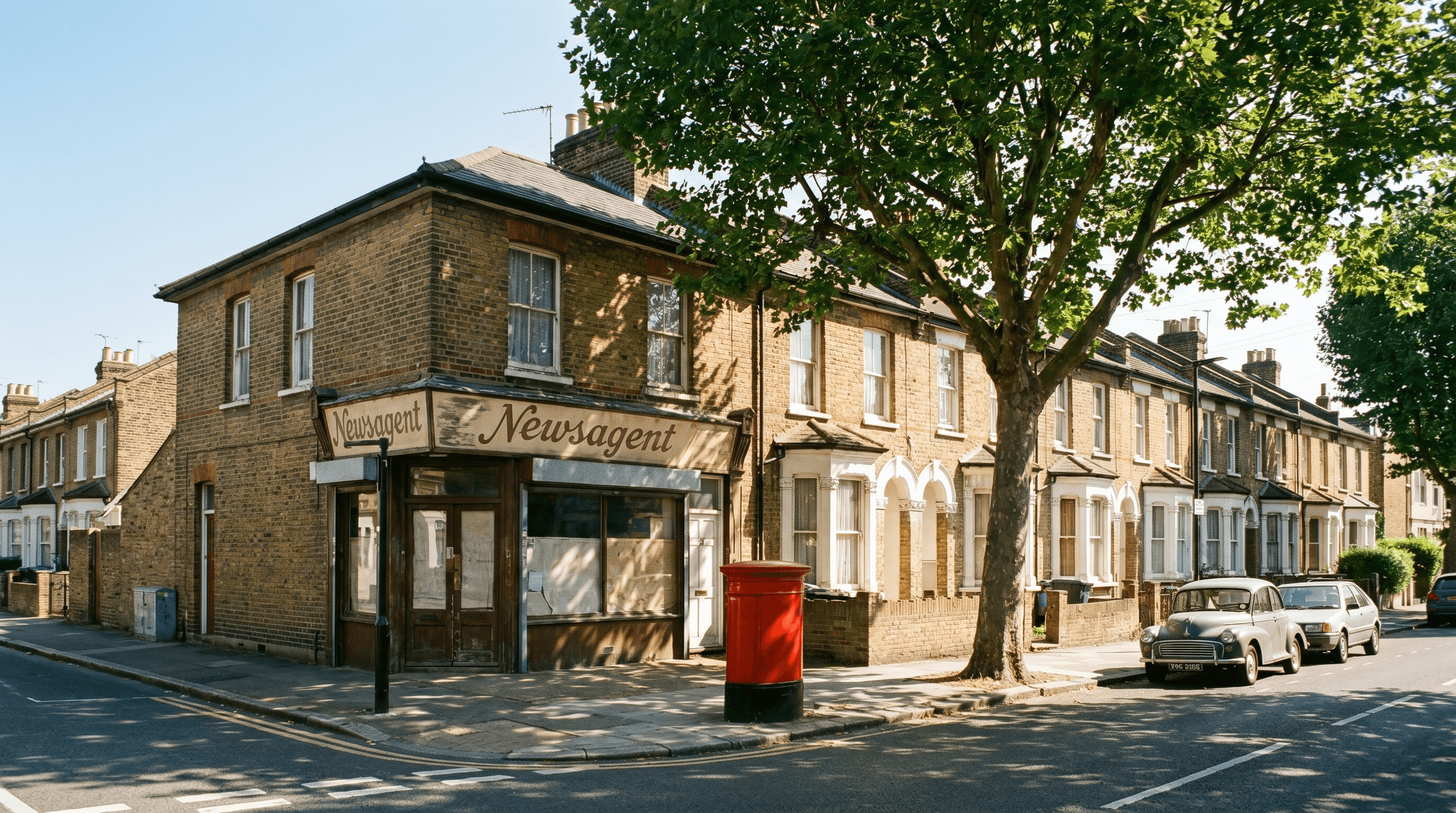
Buying in London
Around 60% of London property sales involve leasehold tenure, according to DLUHC leasehold statistics 2024. That is the highest density of any region in England and Wales. Before you offer on a London address, Eavesdrop runs 66 public-register checks specific to Greater London — covering leasehold tenure, tidal flood zones, conservation area restrictions, and cladding status — so you know what you are walking into before you instruct a solicitor.
Leasehold density: higher than anywhere else in England
London has the highest concentration of leasehold property in England. Almost every flat sold in the capital transfers on a leasehold basis, and a significant proportion of the leasehold stock in zones 2 to 4 — particularly Victorian and Edwardian mansion block conversions — carries unexpired terms between 60 and 90 years (HM Land Registry Price Paid Data 2024). The practical consequences of a short lease compound quickly.
When an unexpired term falls below 80 years, a leaseholder extending under the Leasehold Reform, Housing and Urban Development Act 1993 must pay marriage value — typically 50% of the increase in the property's market value created by the extension itself (LRA 1993 Schedule 13). For a central London flat worth £500,000, marriage value alone can add £30,000–£60,000 to the premium. Buyers who do not check the lease before offering frequently discover this cost during conveyancing — after they have already paid for surveys and legal work.
Ground rent is a second leasehold trap specific to London. Many leases granted between 2000 and 2020 contain doubling ground rent clauses that render the property unmortgageable under current UK Finance Mortgage Lenders' Handbook rules. These clauses are common in larger ex-local-authority blocks in Hackney, Tower Hamlets, and Lewisham. Eavesdrop checks leasehold risks including unexpired term, ground rent structure, and mortgageability implications for every London address.
Thames tidal flood risk and the 2050 uplift
The Environment Agency Thames Estuary 2100 Plan identifies approximately 1.4 million London properties in the tidal Thames flood plain. Flood Zones 2 and 3 extend significantly inland at Hammersmith, Wandsworth, Greenwich, and along the lower Lea valley. The Thames Barrier has closed an average of 7–12 times per year over the past decade — but it was designed to a 1 in 1,000 year standard for central London, and that standard is being eroded by sea level rise.
The EA Climate Change Allowances (2022 update) project a material increase in surface flooding risk by 2050 from inland tributaries — the Wandle, the Beverley Brook, and the Ravensbourne — that sit outside the Thames Barrier's protection. Properties in SW17, SE6, and SE13 that currently appear low-risk on standard EA flood maps may face elevated risk under the 2050 scenario. This information is publicly available but buried in technical catchment management plans rather than consumer-facing tools.
Eavesdrop cross-references the EA National Flood Risk Assessment and Thames Estuary 2100 data for every address, surfacing the current flood zone and flagging where Climate Change Allowances suggest elevated future risk. See the full flood risk explainer for how EA zones translate to insurance and mortgage implications.
Conservation areas and Article 4 directions
London has more than 1,000 designated conservation areas — a higher density than any other region (Historic England National List, 2025). Being inside a conservation area does not prevent you from buying or modifying a property, but it removes many permitted development rights that would otherwise be automatic. Window replacement, external render, satellite dishes, painting over brick, and rear extensions above a certain size all require full planning consent in many London conservation areas.
Article 4 directions go further, removing specific permitted development rights across entire boroughs or defined areas. Camden, Westminster, and Hackney have borough-wide Article 4 directions removing permitted development for Houses in Multiple Occupation (HMO) conversions. Islington has an Article 4 removing the right to subdivide a self-contained flat. These directions are highly material for investors and developers, but they also affect homeowners who planned to build a loft conversion or rear extension without realising planning consent was required (GLA London Plan 2021).
Eavesdrop checks the Historic England National List and each local authority's planning constraints layer to identify conservation area designation and Article 4 directions. The report also surfaces planning history for the address, so you can see refused applications that signal future constraint.
Cladding, EWS1 and the Building Safety Act 2022
London has the highest concentration of residential blocks above 11 metres in England. Since the RICS EWS1 Form guidance (2021 revision), mortgage lenders require an EWS1 form on flats in blocks of any height where external wall materials present a potential fire risk. An EWS1 B1 or B2 rating — indicating remediation is needed — makes a property effectively unmortgageable with most high-street lenders until works are complete.
The Building Safety Act 2022 shifted a significant portion of remediation costs away from leaseholders in qualifying buildings. Developers and freeholders responsible for defective original construction are now legally liable for remediation costs in buildings they built in the last 30 years. However, the practical enforcement of these obligations — particularly against insolvent or overseas developers — is still working through the courts (Ministry of Housing, Communities and Local Government Cladding Safety Scheme guidance 2024). Buyers of affected flats should obtain a copy of the EWS1 form and any remediation agreement before exchange. Eavesdrop surfaces cladding-related mortgageability flags as part of the leasehold panel.
Noise, overflight, and transport vibration
Approximately 600,000 London properties sit beneath active Heathrow flight paths, according to the DfT Strategic Noise Map England 2022. Properties under approach tracks in Chiswick, Richmond, Kew, and Barnes experience LAeq noise levels above 55 dB — the threshold above which the WHO identifies regular sleep interference. This is not a reason to avoid buying, but it is material information that should inform offer price.
Since Law Society TA6 Form Edition 4 (2020), sellers must disclose known sources of noise and vibration including proximity to the Elizabeth Line (Crossrail) and London Underground lines. Ground vibration from deep-level tube lines — particularly the Northern, Central, and Jubilee lines — has been measurable in properties within approximately 30 metres of tunnel centre lines. Structural engineers are sometimes required to assess vibration compatibility with sensitive uses such as home recording studios or specialist medical equipment.
Eavesdrop checks the DfT Strategic Noise Map and Heathrow flight path data for every London address. The noise check surfaces whether the property falls within a designated noise action area, the estimated LAeq contour band, and whether it is within a Heathrow noise contour zone.